

Monitoring ProgramsWe have eyes all over the place
Robust research is the foundation of successful conservation. Without data and enhanced understanding, it is impossible to take measured action, or even to monitor if conservation action is successful – for this, we need a baseline and robust collaborative research efforts island-wide. This is why at Big Blue we champion collaboration because together we are stronger and can do more for ocean monitoring in Thailand.
We are dedicated and passionate about supporting existing citizen science projects, collaborating in island-wide conservation initiatives as well as pioneering our own research. Existing projects include the national Whale Shark photo ID initiative pioneered by Thai Whale Sharks which brings divers all over Thailand together to help track whale shark movements, as well as microplastic surveys we do in collaboration with Koh Tao Clean-Up. We have also embarked on regular coral reef monitoring surveys, the data of which we share to better support conservation action.
Want to get involved in front line conservation, research action and ocean monitoring in Thailand? You don’t have to be a scientist to do citizen science. Join the team, keep an eye out on social media for upcoming events and come along.
Whale Shark ID
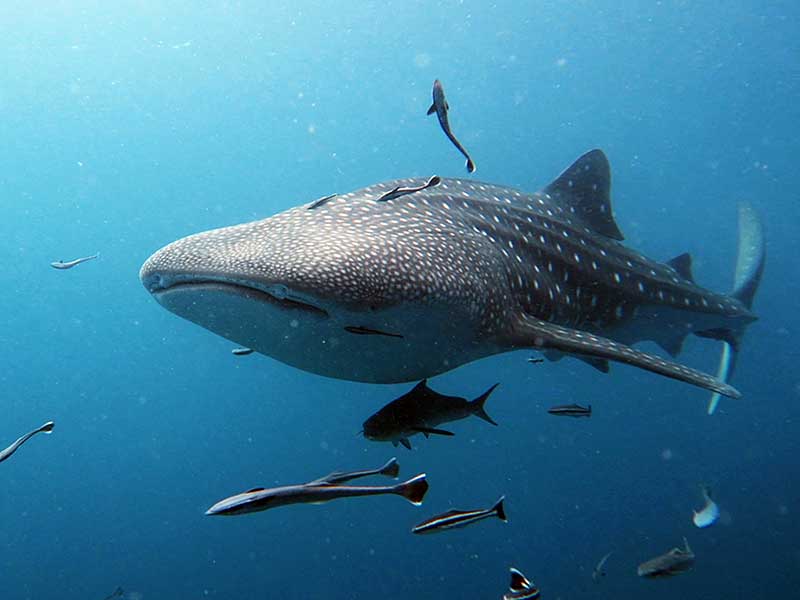
Whale Sharks are slow-moving, filter-feeding sharks, part of the order of Orectolobiformes, otherwise known as Carpet sharks. They also hold the record for the largest non-mammalian vertebrate, with an adult able to grow as large as 12 meters in length, weighing approximately 21 tonnes. Despite their size and gentle nature, they are considered critically endangered, becoming another victim of global shark catch for the purpose of shark fin soup.
With their numbers in constant decline, it is a great privilege to swim in the presence of a whale shark, and when doing so you can help with keeping track of local populations. Even helping to identify and then track new individuals. Whale Sharks can be distinguished by the dotted pattern across their body and that pattern is the same from juvenile to adult. So by taking a level picture of (ideally) the left side of the animal, between the pectoral fin and dorsal fin, we can use this as unique identification, similar to how we use fingerprints to identify human individuals.
For more information on taking part in Whale shark ID or to contribute your pictures to the database, please email us at info@bigblueconservation.com or login to https://whaleshark.org.au/whale-shark-id/

Seahorse ID
Seahorses, otherwise known as Hippocampus, Latin for horse sea monster, are small bony segmented fish that have a distinctive head and neck shaped like that of a horse. They are most commonly found in shallow waters, clinging to seagrasses or other marine plants.
Hippocampus populations are known to be plummeting due to the lucrative dried seahorse trade in Thailand, estimated to be worth a staggering US$26.5 million per year, with only approximately US$5.5 million worth of catch being officially reported and regulated. Seahorses are thought to have medicinal properties and the dried seahorses are used in many products across Asia.
Described as the slowest fish, they struggle to avoid predation and activity human influence, leading to reductions in world populations. In collaboration with the citizen science project, iSeahorse, you can help monitor local seahorse populations.
Anyone can join, whether you’re a diver, a scientist, a seahorse enthusiast, or just on a beach holiday. You can upload your photos and observations to https://www.iseahorse.org/. By doing so, you can help identify seahorse species and can advocate for their protection in your ocean neighbourhood.
Sea Turtle ID
Here on Koh Tao, we are lucky enough to get the chance to see sea turtles during diving and snorkelling trips. There are only 7 different species of sea turtle left on the planet and the majority of those species are threatened with extinction. Here we mainly see Hawksbill and Green sea turtles, and so as a community we have started to ID and track these precious creatures.
There are over 800 observations in the database and that has really helped improve the quality of the data this year. A total of over 100 turtles have been recorded around the island, with some of the sightings showing a return of some individuals. While undoubtedly Koh Tao is an important location for turtles, we definitely need more input from outside our one little island. The good news is that the database is growing and our understanding is improving.
Unfortunately, a quarter of all of the recorded green turtles were found dead afterwards. This number goes up if you start to include turtles that had to be rescued and/or sent to Chumphon for recovery. In order to understand how these animals are being affected, there is a growing urgency to record sightings.
By taking a clear picture of the head on both sides, and a picture of the entire turtle, we can apply a computer algorithm to the unique scutes on the face. We can then combine that data with any clear markings on the shell. The individual can then be recorded into the database as either a new or a returning individual.

Coral Watch
Developed by the University of Queensland, Australia, Coral Watch is a coral health monitoring protocol used to evaluate coral bleaching. Using the standardized Coral Watch colour chart, we can monitor the change in colour intensity of the corals, which has a direct relationship to their health.
And here’s the best part – you can contribute to Coral Watch monitoring as part of any fun dive! So if you’re keen to help, come on down to Big Blue Diving and inquire at our reception. Then you can then have a 30-minute introduction to the method from our Big Blue Conservation team.
In conjunction with Coral Watch, here at Big Blue Conservation, we run bi-monthly surveys of the local coral reef to keep a close eye on coral disease, fish biodiversity and abundance as well as nip any coral degradation in the bud and perform restoration activities! You can join these surveys as a Big Blue Intern and become part of our core conservation team.