

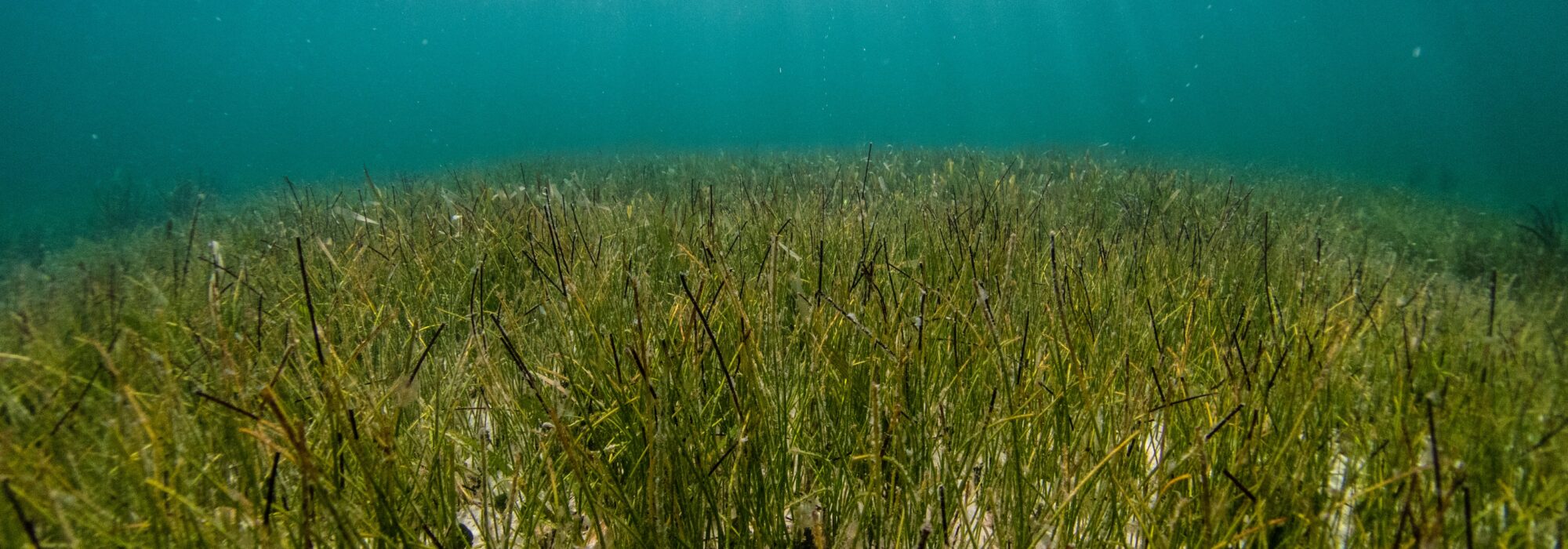
Seagrass Ecosystems
Seagrasses are widely distributed across the globe, from the tropics to the Arctic, extending across all continents except Antarctica and covering less than 0.2% of the seafloor (Figure 1). These ecosystems have existed for approximately 100 million years, and today there are around 72 recognized species despite their relatively small global coverage.

Primarily found in shallow coastal waters where light levels are high, these highly productive ecosystems grow from intertidal zones down to depths of around 60 meters. They require a suitable substrate in order to establish, preferring sandy or muddy sediments, although some species have been observed growing on rocky surfaces.
Despite their similar appearance to seaweeds, seagrasses are more closely related to terrestrial flowering plants. They possess roots, stems, and leaves, and are capable of producing both flowers and seeds. One key difference from their land relatives is the absence of stomata — the pores that regulate gas and water exchange in terrestrial plants. Instead, seagrasses have a thin cuticle layer that allows gases to diffuse directly between the plant and the surrounding water.
Importance of Seagrass Ecosystems
Seagrass meadows are often described as the gardens of the sea. These remarkable marine flowering plants play a vital role in coastal ecosystems, as well as in global climate regulation and food security. Acting as ecosystem engineers, they create complex three-dimensional habitats that support a wide range of biodiversity in areas that would otherwise be structurally simple environments (Unsworth et al., 2019a).
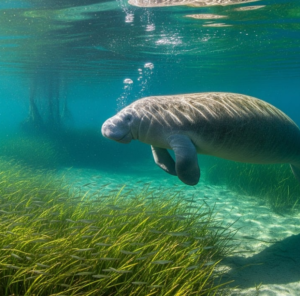
Seagrass habitats function as essential nursery grounds for marine life and are estimated to support up to 20% of global fisheries by providing shelter and feeding areas for commercially important species (Unsworth et al., 2019b). Furthermore, they provide critical food and habitat for thousands of species, including dugongs, manatees, green sea turtles, juvenile fish, and invertebrates (Image 1).

In addition to supporting biodiversity, seagrass meadows play a crucial role in climate regulation. As significant blue carbon ecosystems, they act as powerful carbon sinks, storing carbon up to 35 times faster than tropical rainforests. They also improve water quality through nutrient cycling, pollutant filtration, oxygen production, and sediment stabilization — helping to reduce coastal erosion. Research further suggests that these nutrient cycling processes may reduce bacterial pathogens harmful to both humans and marine organisms (Lamb et al., 2017).
Finally, similarly to mangrove forests and coral reef systems, seagrasses contribute to coastal protection by buffering wave energy and reducing the impacts of storms, flooding, and shoreline erosion.
What is Happening to Seagrasses?
Seagrass meadows are facing significant pressure on a global scale due to anthropogenic impacts, resulting in an accelerated decline in coverage, condition, and ultimately, ecosystem functioning. Approximately 1.5% of global seagrass area is lost each year (Waycott et al., 2009), and nearly one quarter of all species are classified as threatened by the IUCN (International Union for the Conservation of Nature).
Due to their proximity to coastal communities, seagrass ecosystems are particularly vulnerable to human activities, including physical disturbance from dredging, fishing, and anchoring; sediment and nutrient runoff; declining water quality associated with aquaculture; invasive species; disease; and the impacts of climate change (Duarte, 2002; Orth et al., 2006).
The loss of these vital habitats creates a cascading effect on both marine biodiversity and the human communities that rely on them. Species such as manatees, green sea turtles, and dugongs are especially at risk (Image 2), as they depend on seagrass meadows as a primary food source. Beyond biodiversity impacts, declining seagrass ecosystems also threaten fisheries, coastal protection, and carbon storage capacity.
Seagrass Conservation Efforts
On the 1st of March, we celebrated World Seagrass Day to raise awareness about the urgent need for seagrass conservation. Unfortunately, these ecosystems still do not receive the attention they deserve. Although scientific research continues to highlight their ecological and climate importance, this knowledge remains largely disconnected from public awareness — especially when compared to neighbouring ecosystems such as coral reefs, mangroves, and saltmarshes.
Encouragingly, awareness is slowly increasing, particularly regarding their role as blue carbon ecosystems and the urgent need to reduce nutrient and sediment runoff into coastal habitats. Education and community engagement are also expanding. However, many ecologically significant seagrass areas remain unprotected, and in some regions their conservation status is still unknown.
Research by Unsworth et al. (2019) identifies six major global challenges in seagrass conservation:
- Raising public and political awareness.
- Updating species-level assessments and mapping the condition of seagrass meadows.
- Understanding local scale anthropogenic impacts to better implement management plans.
- Improving knowledge of ecological interactions between seagrasses and coastal communities at a socio-economic level.
- Increasing research investment and long-term monitoring.
- Strengthening our understanding of how seagrasses contribute to climate regulation.
Addressing these challenges is essential if we are to effectively conserve and restore these ecosystems. Stronger regulations to control land-based runoff must be implemented, alongside enhanced protection measures and the development of a coordinated global monitoring network. Additionally, quantitative models are needed to better predict seagrass loss and guide restoration efforts.
Only through combined scientific research, policy action, and community engagement can we ensure the long-term survival of these vital marine habitats.
Author: Isabel Vizcaya
Reference list: